


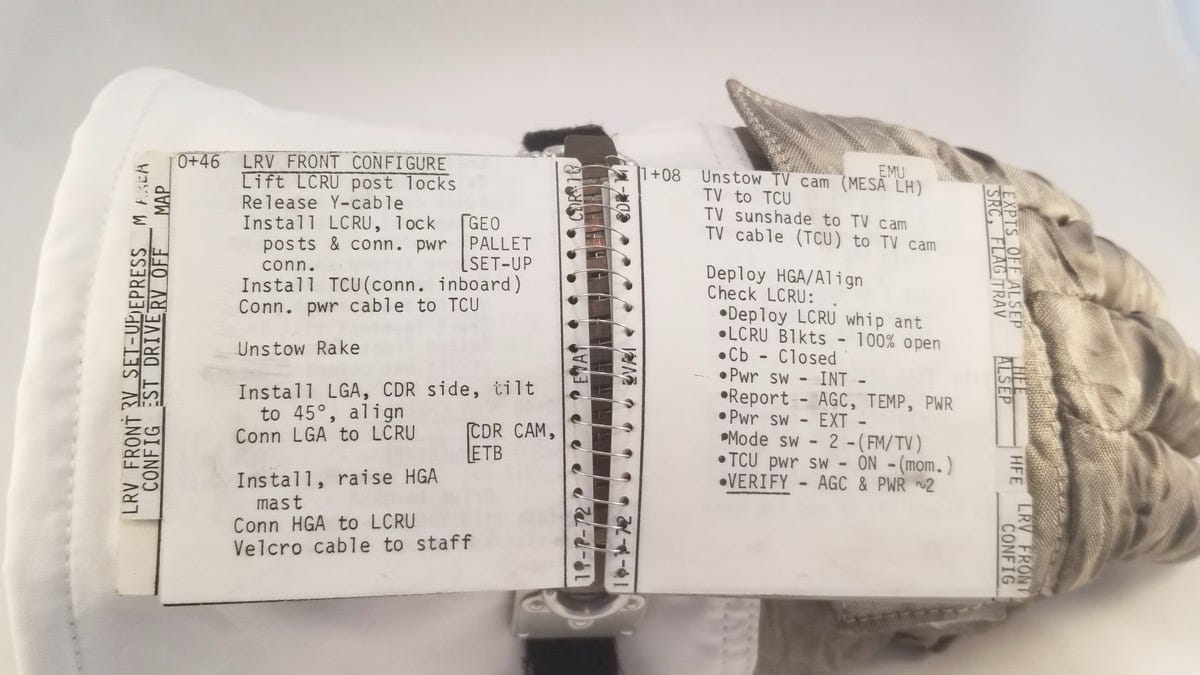
A company’s operating procedures — its SOPs — are not something you can see from the outside. But I have never had much trouble telling which companies have working ones. They answer you the same day; they run leaner; their new hires get up to speed faster. The customers notice first, because the company is more responsive; the shareholders notice next, because it is more profitable; and the competitors notice last, usually while starting to lose deals. That is what I mean by hidden powers — hidden as documents, unmistakable as outcomes.
Having written SOPs, though, does not automatically mean having working ones.
A large public company I know had written everything down. There were procedures for most of what it did — how to run the process, how to handle the exception, what to check before anything went out the door. The documents sat in team folders, on a SharePoint site, across two or three shared drives, and in a few places that made sense only to whoever had put them there.
New people arrived and could not find any of them. They would ask where to start, and nobody was entirely sure. So they asked whoever had been there longest.
That person was not always good at explaining — knowing how to do something and knowing how to describe it are two different skills, and only one of them tends to get you promoted. They tried anyway. For a while the arrangement held, in the way undocumented arrangements do: quietly, expensively, and entirely on the goodwill of a few people.
Then some of those people left. Mostly retired. What left with them was not simply experience; it was the operating manual, which had never really been on SharePoint at all. It had been in their heads the whole time. What remained was frustration, complaints, and a great deal of lost productivity.
Here is the uncomfortable part. That company had done the work. It had the documents. By any reasonable audit it had standard operating procedures. What it did not necessarily have was the compounding effect that makes customers, shareholders and competitors notice.
So why do so many companies have the paperwork and so few have the actual hidden power?
Because a procedure written once is usually stale before it is implemented, and a document nobody opens is not a procedure at all; it is a record that a procedure was written. The work moves on. Someone finds a better way and tells three people. An exception becomes routine and never gets added. The document sits where it was, drifting further away from how the work is actually done, until a new hire follows it faithfully and produces something nobody wanted.
There is a whole category of software for this now, and it is genuinely good at the part it was built for: it will watch you do the job once, turn that into a clean set of steps, assign it to the new hire and tell you who has read it. What most of it is not very good at is noticing the day your procedure and your actual work stop being the same thing.
It is not laziness, and it is not a failure of discipline. It is just a lot of extra work that people, especially in small companies, do not have time for.
But that is the part that is now changing, and from an unexpected direction.
There are several plain text files on my computer that describe how my work gets done. They are quite simple. They are sets of instructions in ordinary English: here is how we do this, here is what good looks like, here is what to check before anything is called finished. Their one distinguishing feature is that they are not written only for me. They are written for the AI agents I work with, and they get read before anything happens, every single time. These files have workaday names like CLAUDE.md and AGENTS.md, and the name matters far less than what the thing is, which is a standard operating procedure that something actually follows.
They are the most-used operating documents I have ever written. They are the most-used because the thing reading them is not a person. It does not skim; it does not decide that it already knows this part; it does not work from a version it downloaded in March. A document that is executed daily rather than filed does not go out of date quietly — when it drifts from how the work really happens, something usually breaks visibly, that day, in front of me. The maintenance problem that killed every SOP I have ever seen turns out to be mostly a question of whether the document actually drives the daily work.
In practice this is one set of instructions for one workflow, with some steps carried out by a person and some by an agent. Producing one of these weekly essays, for example, used to take me many hours, cause a lot of frustration, and be sporadic at best; it now takes two hours of my time a week, give or take. The reason is that the work is split across separate agents in separate sessions, all of them governed by the same written standards: one agent runs the capture conversation, in which it pulls the ideas and the real-life examples out of me; a different one drafts from it; another verifies the sources and references; another works with me hand in hand on perfecting each version of the draft, sometimes seven or eight of them; another tracks what changed and why; and a last one, in a fresh session that has not seen any of the earlier work, reviews the result against the writing standard — itself an SOP in its own way — and reports what it finds. It does not touch the text. It hands me a list, I decide what I accept, and a separate pass applies it. No agent reviews its own output, and none of them gets to quietly become the author. That single rule has done more for the consistency and quality of the work than anything I have ever written before.
What happens in those couple of hours is actually not writing. It is editing — reading the thing and deciding whether it is any good, which parts are true, which parts sound like me, and what has to change. That is the creative work, it is most of the remaining time, and it did not compress at all. I would be suspicious of anybody who told you it had.
Handing a project off has the same shape. It used to cost days — the reconstruction, the where-were-we, the three things that existed only in somebody’s memory. With the instructions and the operating state written down where the next session can pick them up, it takes minutes, or at worst hours.
The accuracy of my SOPs does not hold on its own either, which is why there is a health-check workflow whose entire job is to maintain all the other workflows. Once a week an agent audits the setup of all my workflows and reports what is broken or drifting; I add whatever irritated me that week, in the words I would use to complain about it; another agent turns that into a set of release instructions. Some of them are implemented immediately, some go on a roadmap and are honestly labelled as deferred. It is unglamorous, and between it and the daily use, it is why my workflows are not already rotting.
If you take one practical thing from this, take this one. Write down what your procedure says happens, then go and watch what actually happens. Usually the difference is where the money is — the rework, the duplicated approvals, the step everyone quietly skips because it stopped making sense two years ago. Build the document on the workflow you really have, not on the one you wish you had; a wishlist cannot be followed, by a person or by anything else, and it improves nothing, because it was never true to begin with. Then automate it with the large language models.
There is a second reason to bother, and it is becoming the more urgent one. If you are putting AI anywhere near your operations, the same document that tells the machine how you work is what stops it producing something fluent, confident and wrong. Explicit standards are how you get quality out of an agent. Without them you have handed the work to something eager and unsupervised — which is not a technology problem. It is the problem of an unbriefed new hire, arriving much faster.
I should be plain about the limits of what I am claiming. My own operation is relatively small. Everything above I have watched in my own work over several months, and it has saved me hours a day. That this becomes a serious advantage for small and midsize businesses is our thesis, and I would rather call it that.
What I am confident of is the direction. For most of the history of the modern company, writing down how the work gets done has been a cost — absorbed by whoever cared enough, in the hope that someone might read it later. It is now the thing that runs. The least impressive document in your company, the plain one nobody would ever think to show a visitor, has quietly become the most operational one.
Nobody is ever going to compliment you on it. That, more or less, is how you will know it is working.