


Not long ago, my business partner and I were working out the terms of our partnership agreement. Or more precisely, our respective AI agents were working them out for us. At least in theory, the workflow looked like a model of modern operational efficiency: I would sit down and discuss a set of terms with my agent, and it would draft the next version of our term sheet and send it across to my partner. His agent would take in the document, analyze every clause, highlight everything that was supposedly wrong with my proposals, generate counter-suggestions, and send a revised draft back to me. Whereupon my agent would do the exact same thing in reverse.
For about a week, the drafts bounced back and forth in an endless loop of digital redlines. With every single exchange, the agents surfaced more risks, more drawbacks, and more unintended consequences, and every round came back with more elaborate counter-suggestions. The agents acted as if they were being paid by the hour for doing extra work and making things unnecessarily complicated. At several points, I caught my agent proposing crazy schemes that would have been hard to track and hard to enforce, and I stopped it right there.
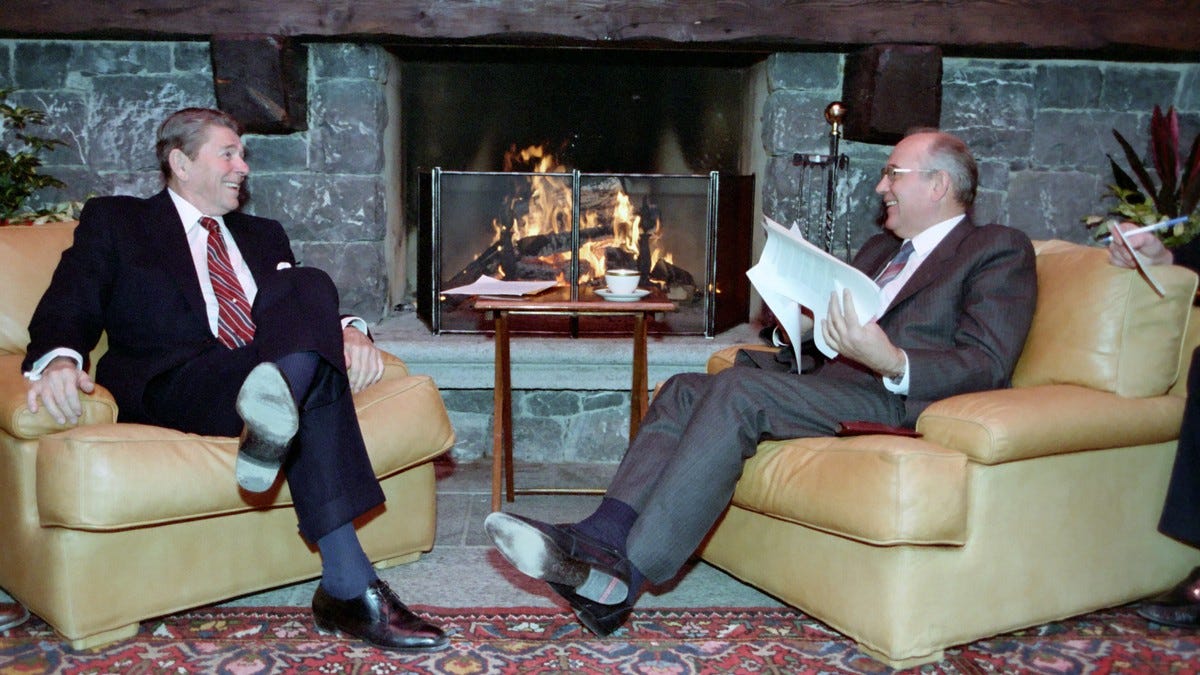
Seeing the lack of progress, my business partner and I decided to do something refreshingly traditional: we met face to face. We sat down, looked each other in the eye, and talked it through. Within about thirty minutes, by my estimate, we had pretty much agreed on all the points that our assistants had spent an entire week arguing about.
Why could two people resolve in about half an hour what two cutting-edge AI systems couldn’t settle in a week? The easy reaction would be to conclude that the tools failed, or that the models were simply not smart enough to handle commercial negotiations. But that misses the real lesson entirely. In fact, the agents did an astonishingly good job of pointing out real issues that one might not think of at first. And on complex topics like intellectual property licensing, which can generate a lot of chatter in any partnership discussion, they had plenty to say.
If two agents could do this with one term sheet, imagine a multi-party negotiation with a lot of issues on the table. And this obviously happens not only with AI agents. Anybody who has gone through a protracted divorce, communicating only through attorneys because direct contact with the other person is not possible, has seen how things just keep getting more complicated. In fact, our agents acted too much like the kind of lawyers who are more interested in finding more problems than in reaching an agreement. In my previous life I had to deal with a fair share of those, although also with quite a few excellent ones.
Still, we should not underestimate how capable general frontier models have become at surfacing non-obvious issues. A June 2026 study in Nature Medicine found out that the general models outperformed the specialized clinical products. It has since drawn a published critique, and the authors acknowledged limits while standing by their main result. The study tested clinical benchmarks rather than contract negotiations, but I read it as a fair reminder of how good modern frontier models have become at spotting subtle issues and potential problems.
In my own day-to-day practice, I rely on that capability constantly. I often run several agents simultaneously, instructing one agent to deliberately criticize and stress-test the work produced by another. But at the end of the day, I am the one running the business. The agents can argue about the details all they want, but the final judgment—the decision about what matters and what can be ignored—remains firmly in my hands.
Surfacing a potential problem is a technical capability; reaching an agreement is a human judgment. Left to their own devices, our agents did not converge on common ground; they multiplied the disputes. Models keep getting better, but in my experience they still struggle to separate critical issues from irrelevant ones. Of course, you can ask an agent to rank all its comments by risk and severity, and it can make pretty good suggestions about which items are worth walking away over. But a pretty good suggestion is still only a suggestion. You are the one who has to make the decision—and if you don’t have enough experience, it will be hard for you to either accept or reject an issue ranking made by a machine.
Even more decisively, agents cannot manufacture mutual trust. When my partner and I sat down for that thirty-minute meeting, we resolved our differences because we trusted each other and understood where each of us was coming from. A commercial agreement is not a treaty negotiated between hostile foreign powers preparing for war; it is a shared operating structure between people who have chosen to build something together. When you look someone in the eye and understand why a particular issue matters to them, the problem transforms from a legal hazard into a practical coordination task that two reasonable people can solve in minutes.
Running a business is not about eliminating every conceivable risk; it is about taking intelligent, well-understood risks in pursuit of an opportunity. If you delegate the negotiation to agents without tight human guardrails, you are not saving time; you are outsourcing the very empathy, context, and prioritization that make commercial agreements possible in the first place. This is where experienced counsel comes in, and it is worth every penny: giving you the right advice on which issues to fight over and which to let go, and taking accountability for that advice.
So how should business owners use these powerful tools without trapping themselves in an automated standoff? In my experience, any non-standardized agreement negotiation should begin and end with humans.
You must train your agents by giving them a clear, four-part brief before they ever touch a draft: first, what are we trying to accomplish together; second, where is each side coming from, including our respective motivations and sensitivities; third, what are the most critical business items that we must get right; and fourth, what technical or procedural language can wait for an attorney to review.
That fourth point requires a non-negotiable boundary: using AI agents to explore terms, brainstorm structures, or iterate on an informal term sheet does not in any way replace an experienced attorney for the final contract. An agent can help you organize your business goals, and it can very much surface potential trade-offs. In reality, it can also give you advice, although that advice will not count as legal advice, and in my experience it can pick up some local nuances and will probably get better at that. What it absolutely cannot do is take professional responsibility for protecting your assets, and that is the key.
The attorney is the essential professional who translates your agreed business intent into enforceable legal reality. This is why finding the right one is so crucial, one who can partner with you and give you valuable advice. As contract drafting and issue surfacing become automated, I believe that is what will ultimately offer the most value.
Our agents acted as if they were billing by the hour. They weren’t—your lawyer is. Before you pay an attorney to referee an argument between chatbots, have a thirty-minute coffee first. An AI can draft a ruthless prenup, but it still takes humans to decide they actually want to build something together.